How to Prevent Site Theft on High-Risk Sites
- pegasusdatasystems
- Jun 7
- 6 min read
A site can be hit in a single night and the damage usually goes well beyond the value of what was taken. Missing tools, cut fencing, damaged plant, forced entry and project delays all add cost fast. If you are looking at how to prevent site theft, the real answer is not one product. It is a layered security plan built around visibility, control and a fast response when something goes wrong.
Temporary sites, open yards, civil works, fit-outs and infrastructure projects are especially exposed because they often change week to week. Access points move, equipment is relocated, subcontractors come and go, and lighting can be inconsistent. That makes it easy for thieves to spot gaps before site managers do.
Why site theft happens so often
Most theft is opportunistic, but that does not mean it is random. Thieves look for patterns. They notice when a site is dark after hours, when fencing is loose, when there is no visible surveillance and when valuable assets are left in the same place every night. They also pay attention to routines such as delivery times, shutdown periods and weekends when nobody is expected onsite.
This is why low-cost deterrents on their own rarely hold up. A padlock on a gate may slow someone down, but it does not help much if there is no footage, no alarm and no way to confirm a breach in real time. On the other hand, an expensive camera system installed without proper coverage can still leave blind spots around entry points, fuel stores or laydown areas.
The strongest approach combines physical barriers with surveillance, detection and clear site procedures. Each layer covers the weaknesses of the others.
How to prevent site theft with layered security
The first step is to look at the site the way an intruder would. Where can someone enter without being seen? Which assets can be loaded quickly into a vehicle? Which corners of the site are not visible from the road or neighbouring properties? This exercise usually reveals that the biggest risks are not spread evenly. They sit around a small number of vulnerable areas.
Once those areas are identified, surveillance should be designed around them rather than added as a general afterthought. High-value assets, entry and exit points, perimeter weak spots and any temporary storage zones should all be covered by commercial-grade CCTV. Camera placement matters as much as camera quality. A clear view of faces, vehicle movement and activity around access points is far more useful than wide footage that captures everything badly.
For many sites, fixed infrastructure is not practical. That is where mobile security towers make sense. A solar-powered CCTV tower can be deployed quickly, repositioned as the site changes and used to cover exposed areas without relying on permanent power. This is particularly useful on construction sites, civil projects, vacant blocks, compounds and temporary works where the layout may shift over the life of the job.
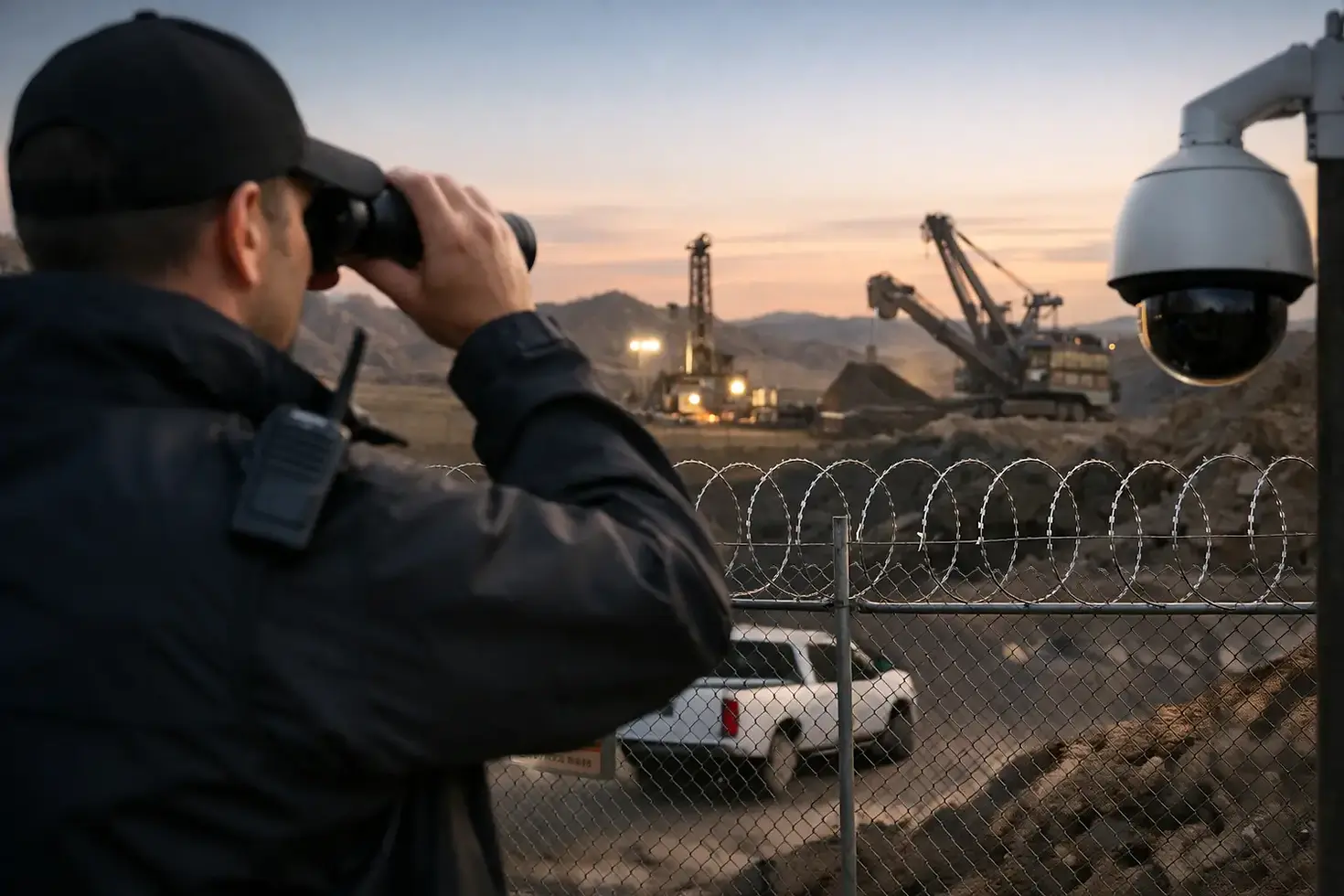
Visible surveillance also changes behaviour. A clearly protected site is less attractive than one that looks unmanaged. The point is not only to record a theft after it happens. It is to make offenders choose another target.
Perimeter control still matters
Cameras are not a substitute for physical security. If a site boundary is poorly maintained, theft becomes easier and more frequent. Fencing should be checked regularly for lifting points, damage and areas where visibility is low. Gates need to be lockable and difficult to force, and access should be reduced to the smallest practical number of entry points after hours.
On larger sites, temporary fencing often becomes a weak link because it is treated as a set-and-forget measure. In reality, fencing needs inspection, repositioning and reinforcement as the project evolves. Materials, skip bins and plant should not be left close to the perimeter where they can be reached or used to assist entry.
Lighting also plays a role, although it depends on the site. Good lighting can improve camera performance and increase visibility around entry points. In some locations, though, poor lighting design creates glare or deep shadow that actually reduces image quality. The right setup depends on the site layout and the cameras being used.
Alarms and monitoring shorten the response time
Recorded footage is useful after an incident, but real protection improves when a breach is detected early. Alarm systems, motion-triggered analytics and monitored surveillance can help turn a passive setup into an active one. That matters because thieves often spend more time onsite than people assume. If they are not interrupted, they may return multiple times or strip a location of anything easy to carry.
Optional 24-hour monitoring adds another layer by allowing suspicious activity to be assessed as it occurs. That can support faster escalation and reduce the delay between intrusion and action. For sites carrying expensive equipment, copper, fuel or tools, that time difference can be significant.
Not every site needs the same level of monitoring. A homeowner protecting a shed or garage may have different requirements from a commercial operator managing a remote compound. The right setup depends on risk, exposure and what a theft would actually cost the business in downtime and replacement.
Access control is part of theft prevention
When people think about site theft, they often focus on break-ins from outside. Internal access is just as important. Lost keys, shared codes and uncontrolled contractor movement make it harder to know who has entered the site and when.
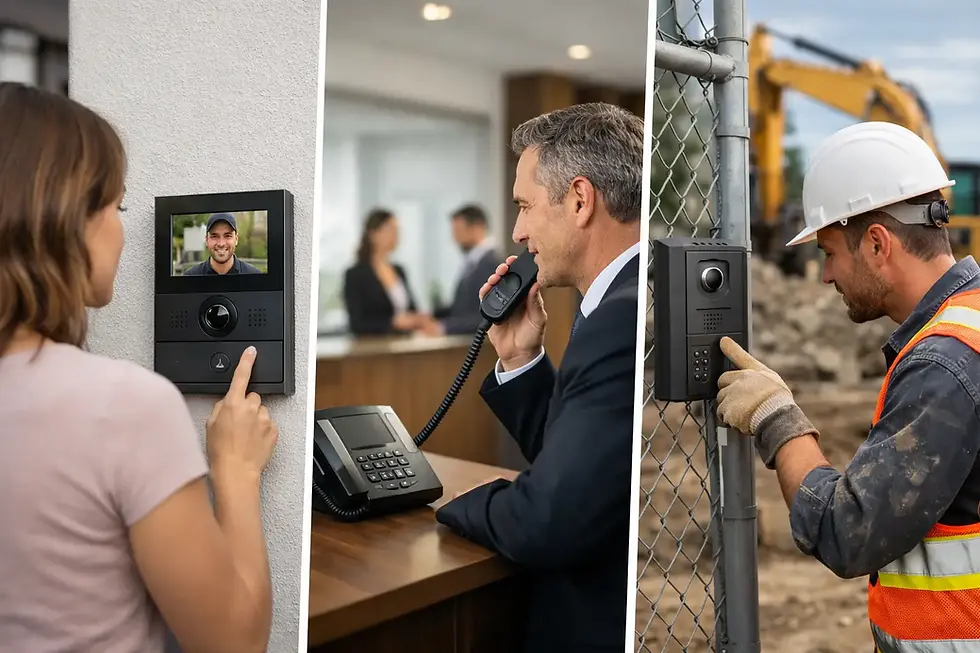
Access control systems help limit that risk by assigning entry permissions and creating a record of access events. On commercial premises, warehouses and multi-tenant facilities, this can reduce the chance of unauthorised entry after hours and improve accountability. Intercoms can also help where visitor access needs to be managed without leaving doors or gates unsecured.
For temporary sites, access control may be simpler, but it still matters. A locked container with poor key management is not much of a control. If half the crew has a copied key and nobody tracks handover, it becomes almost impossible to isolate risk.
Good site habits reduce avoidable losses
Even strong systems are less effective if the site is run loosely. Tools left in the open, plant parked near boundaries and inconsistent lock-up routines all make a site easier to target. Theft prevention works best when site procedures support the hardware.
At the end of each day, high-value items should be secured, smaller equipment should be removed from easy view and access points should be checked properly rather than assumed to be locked. Deliveries should be planned so that valuable stock is not left sitting unattended, and serial numbers or asset registers should be kept up to date. These are simple measures, but they improve both prevention and recovery.
Staff awareness matters too. If teams know what suspicious behaviour looks like and who to report it to, unusual activity is less likely to be ignored. On busy sites, strangers can blend in easily, especially when high-vis clothing is all it takes to look legitimate.
How to prevent site theft without overcomplicating it
The best security plan is one that fits the site and can be maintained properly. Some locations need a full integrated setup with CCTV, alarms, access control and monitoring. Others may need rapid-deployment camera coverage focused on a few critical risk points. Spending more does not always mean better protection if the system is poorly matched to the environment.
A practical assessment should consider what is being protected, how long the site will operate, whether power is available, how often the layout changes and how quickly a response is needed after hours. A residential renovation site, a retail loading area and a remote civil project all face theft risk, but the right control measures will differ.
That is why tailored design matters. Professional installation, correct positioning, reliable equipment and realistic coverage are what turn security from a checklist item into a working solution. Pegasus Data Systems works with property owners, site managers and businesses across South East Queensland to deliver that kind of outcome, including mobile camera towers for temporary and exposed locations where fixed systems are not practical.
Site theft is rarely caused by a single failure. It usually happens when small gaps are left open long enough for someone to take advantage of them. The right security setup closes those gaps before your site becomes the easy option.


Comments