
How to Upgrade Existing CCTV System
A CCTV system that looked fine five years ago can become a weak point very quickly. Blurry footage, poor night vision, patchy coverage and limited remote access are usually the signs that it is time to upgrade existing CCTV system components rather than keep patching around them. For homes, shops, warehouses, offices and temporary sites, the right upgrade improves visibility, shortens response times and gives you clearer evidence when something goes wrong.
When an upgrade makes more sense than a full replacement
Not every older system needs to be stripped out and started again. In many cases, the existing infrastructure still has value. Cabling may be serviceable, camera positions may be well planned, and mounts or conduits may already suit the site. A targeted upgrade can lift performance without the cost and disruption of a complete rebuild.
That said, it depends on what is already installed. If your system uses ageing analogue cameras, a recorder with limited storage, or hardware that no longer supports current apps and firmware, you may be spending money around the edges without fixing the main problem. A professional assessment usually comes down to three things - what can be retained, what is holding the system back, and what level of protection the site now requires.
For many commercial clients, the trigger is not technical failure. It is operational change. A new warehouse layout, extended trading hours, higher stock value, repeat trespass incidents or an insurance requirement can all justify an upgrade even if the old system still turns on each day.
What to check before you upgrade existing CCTV system hardware
The first step is not choosing a camera. It is identifying the gap between what the system currently does and what you need it to do. A residential property may simply need better driveway coverage and clearer after-hours vision. A retail store may need sharper face capture at entry points and more reliable footage around the till. A construction site or exposed asset yard may need broader perimeter visibility and active deterrence after dark.
Camera performance
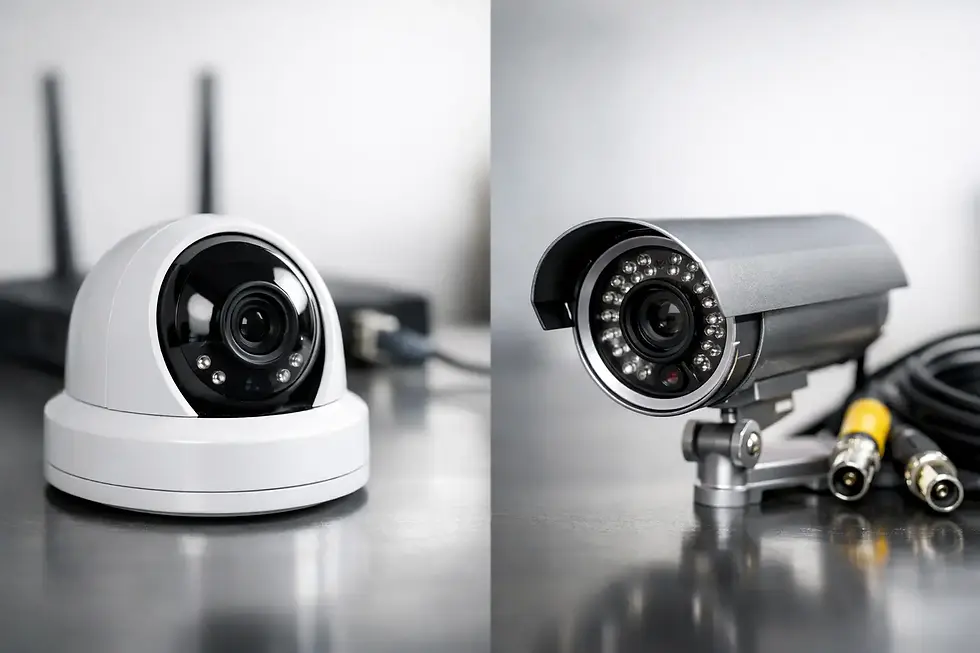
Resolution matters, but only when matched to the job. A higher megapixel camera can improve identification, yet poor placement or incorrect lens selection will still leave blind spots. If footage regularly fails to show faces, number plates or incidents clearly, the issue may be a mix of outdated sensors, poor positioning and unsuitable fields of view.
Night performance is another common weakness. Older cameras often produce grainy images under low light, especially around car parks, access points and perimeter fencing. Upgrading to cameras with stronger low-light capability, infrared performance or active warning features can make a noticeable difference where most incidents happen after hours.
Recorder capacity and features
A recorder is often the hidden bottleneck. Many older DVRs and NVRs have limited channel capacity, short retention periods or software that makes footage retrieval painful. If staff cannot quickly locate events, export evidence or view live footage remotely, the system is not working hard enough.
Newer recorders can offer longer storage, better compression, improved playback and more practical remote access. Some also support analytics such as line crossing, intrusion zones and smarter event filtering. Those tools can reduce time spent searching footage, but they need to be configured properly or they become another source of false alarms.
Cabling and network condition
Good cameras will not perform well on poor infrastructure. Existing coaxial cable may support some upgrades, particularly with the right hardware, but damaged runs, water ingress or unstable power can undermine the whole system. On IP systems, network congestion, poor switch capacity or weak wireless links can also affect reliability.
This is where a site-specific approach matters. A small office may be fine with an upgraded recorder and several new IP cameras. A larger site may need switching, power distribution and network segmentation reviewed so surveillance does not compete with other business systems.
The most common CCTV upgrade paths
There is no single upgrade path that suits every site. The right option depends on budget, existing hardware and the level of risk you are managing.
One common approach is replacing only the cameras while keeping the recorder if it is still compatible and capable. This can work well when the system layout is sound but image quality is poor. Another option is replacing the recorder first, especially where storage, remote access and playback are the biggest frustrations.
For older analogue sites, a staged migration to IP can be the smarter long-term move. It allows more flexibility, better image quality and broader integration with alarms, access control and remote monitoring. The trade-off is that IP upgrades can require more planning around network design, bandwidth and installation scope.
Temporary and exposed sites are a separate category again. In these environments, fixed CCTV may not be practical or fast enough to deploy. A mobile or solar-powered camera tower can be a stronger upgrade path than extending a legacy system beyond its limits. That is particularly true for construction sites, vacant properties, civil works and remote asset protection where power and permanent infrastructure are limited.
Why coverage matters more than camera count
Adding more cameras does not automatically improve security. What matters is whether the system captures the right activity at the right level of detail. Many older systems have too many wide shots and not enough purposeful coverage.
An effective upgrade usually revisits camera roles. One camera might be positioned for general situational awareness, another for facial identification at an entry point, and another for vehicle movement or gate control. This layered approach gives you usable footage rather than a larger archive of vague images.
It also helps avoid overcapitalising. A well-designed eight-camera system can outperform a poorly planned sixteen-camera setup. The goal is not to cover every square metre equally. It is to protect assets, support investigations and strengthen response.
Integrating CCTV with broader site protection
If you are going to upgrade existing CCTV system infrastructure, it is worth considering how the system interacts with the rest of your security setup. CCTV is most effective when it works alongside alarms, access control, intercoms and monitoring.
For example, linking cameras to alarm events can give you immediate visual verification when a sensor is triggered after hours. Integrating access control can help confirm who entered a restricted area and when. On higher-risk sites, monitored surveillance can support faster escalation and reduce the delay between an incident and a response.
This is often where professional design adds the most value. Instead of treating cameras as a standalone purchase, the system is configured around how the site actually operates. That leads to fewer gaps, more useful alerts and a setup that supports staff rather than creating extra admin.
Cost, disruption and the value of staged upgrades
Budget matters, but so does the cost of staying with an underperforming system. If footage cannot support an investigation, if blind spots are being exploited, or if repeated faults are consuming staff time, the cheapest option on paper may be the most expensive over time.
A staged upgrade can be the right balance. High-priority areas such as entry points, loading zones, cash handling areas or perimeter access can be addressed first, followed by recorder expansion or broader camera replacement later. This approach works well for businesses that need to improve protection now without taking on a full-site project in one step.
Disruption can also be managed with proper planning. Reusing cabling where appropriate, scheduling works outside busy periods and configuring remote access properly from the outset all reduce downtime. For active commercial sites, that practical planning is just as important as the hardware itself.
Choosing the right partner for a CCTV upgrade
Security upgrades are not just a product decision. They are an operational decision. The right provider should assess the site, explain what is worth retaining, identify where performance is falling short and recommend a path that suits the risk profile and budget.
That means avoiding generic consumer-style advice. A home with a single frontage has very different requirements from a retail tenancy, a warehouse, a school or a temporary site with theft exposure. Certified installation, correct configuration and optional monitoring support matter because they affect how the system performs once the job is finished.
For South East Queensland sites, local conditions also play a role. Heat, storms, exposure, site layout and the practical realities of outdoor hardware all influence camera choice and installation method. A dependable upgrade is one that is designed for the environment as well as the threat.
Pegasus Data Systems works with clients who need that broader view, from standard CCTV upgrades through to rapid-deployment camera towers for sites that need stronger coverage without fixed infrastructure.
A good CCTV upgrade should leave you with fewer questions, clearer footage and better control over what happens on your property after hours. If your current system is falling short, the next step is not buying more equipment for the sake of it. It is identifying the weaknesses and upgrading with purpose.


Comments