
After Hours Site Protection for Exposed Sites
A site can look secure at 5 pm and become exposed the moment the last worker leaves. Gates are often left unsecured, valuable plant is parked in open areas, and an empty building offers intruders time and privacy. Effective after hours site protection closes that gap with visible deterrence, early detection and a clear response when something is not right.
For property owners and site managers, the objective is not simply to install more equipment. It is to create a security arrangement that suits the site, the assets at risk and how the location operates after dark. A retail tenancy, construction project, warehouse yard and community facility each face different vulnerabilities. The right solution should make unauthorised entry harder, make suspicious activity easier to identify and provide evidence when an incident needs to be investigated.
Why after hours risk needs its own plan
Daytime security often relies on people. Staff can notice an unfamiliar vehicle, a delivery driver can report a damaged gate, and site activity naturally discourages opportunistic offenders. After hours, those informal controls disappear. Lighting may be limited, supervision is reduced and a breach may go unnoticed until the next morning.
This delay can be costly. Theft of tools, copper, stock, fuel or equipment can stop work for days. Vandalism can create repair costs and safety issues. Unauthorised access may also expose a business or site operator to liability, particularly where plant, hazardous materials or incomplete works are involved.
A practical protection plan considers more than the perimeter. It looks at where an intruder is likely to enter, what they are likely to target, how long they could remain on site and who needs to be notified if an alarm is raised. That assessment determines whether a fixed CCTV system, alarm, access control upgrade, mobile camera tower or combined approach is the sensible investment.
Start with the points that are easiest to exploit
Most sites do not need every square metre treated the same way. Security is most effective when it concentrates on genuine weak points: vehicle entrances, pedestrian gates, rear doors, loading areas, equipment compounds, storage cages and blind spots behind buildings.
Walk the site after dark rather than relying only on a daytime inspection. A fence line that appears adequate in daylight may have a gap hidden by landscaping. A camera may cover a doorway but miss the approach to it. Glare from floodlights can reduce image quality, while poorly placed lighting can create deep shadows where a person is difficult to identify.
It also pays to consider routine behaviour. If contractors arrive early, cleaners work late or deliveries occur outside standard hours, access needs to be controlled without creating unnecessary inconvenience. This is where programmed access control, intercoms and clear user permissions can be more dependable than shared keys or codes passed between multiple people.
Use visible surveillance as a deterrent and a record
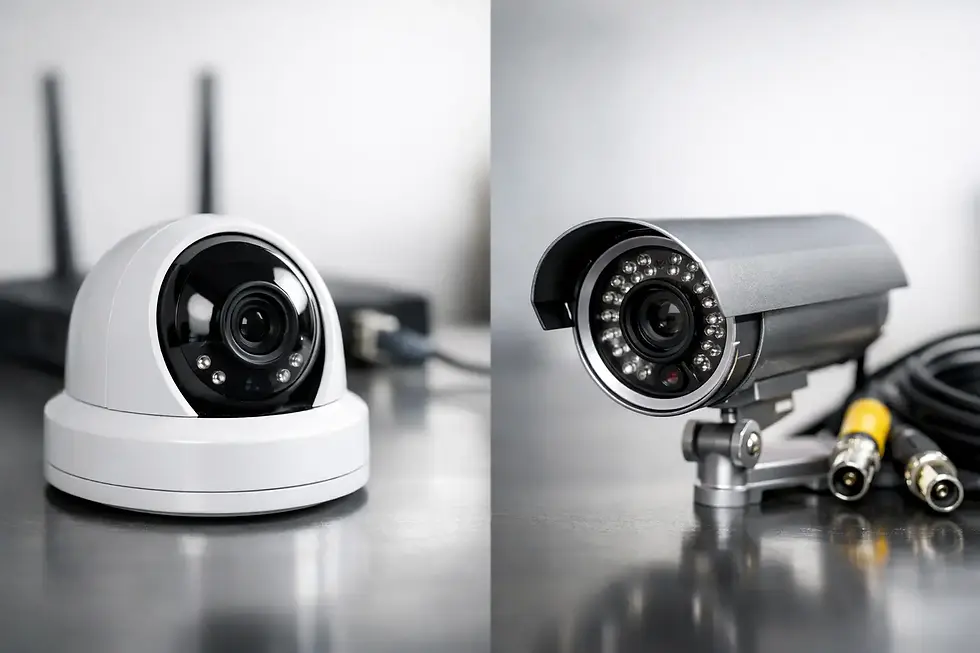
Professional CCTV is central to many after-hours security plans because it performs two jobs at once. A clearly positioned camera can discourage opportunistic activity, while recorded footage can help verify events, identify persons of interest and support an insurance or police report.
However, camera placement and image quality matter more than camera quantity. A wide view may show that somebody entered a yard, but it may not provide a useful face, vehicle registration or detail of the item removed. Cameras should be selected and positioned according to the purpose of each area, whether that is observing general movement, identifying people at an entrance or monitoring a high-value asset.
For temporary, remote or exposed locations, solar-powered CCTV towers are often a practical alternative to installing fixed infrastructure. They can be deployed quickly where mains power and internet connections are unavailable or impractical. Elevated cameras also provide a stronger line of sight across open yards, construction zones, car parks and equipment compounds.
A tower is not automatically the answer for every site. A small enclosed premises may be better served by fixed cameras and an alarm system. But where the layout changes, the site is short term or the risk moves with the assets, a mobile surveillance tower can provide flexible coverage without extensive civil works.
Monitoring turns detection into action
Footage reviewed the next day can be useful, but it does not help stop an incident while it is occurring. Optional 24-hour monitoring adds another layer by allowing alarm activations or verified events to be assessed as they happen, with an agreed escalation process for the site.
The appropriate response depends on the location and risk profile. Some sites need a nominated manager contacted first. Others require a security patrol response or police notification where there is a confirmed threat. The key is to establish responsibilities in advance, including current contact details and instructions for common scenarios.
Combine cameras with physical and electronic controls
CCTV is strongest when it supports other controls rather than carrying the entire security burden. A camera may record a person entering through an unsecured gate, but a properly controlled gate reduces the chance of entry in the first place.
A balanced after-hours arrangement may include fencing and locks at the perimeter, alarm detection at building entry points, access control on doors and gates, CCTV across critical approaches, and intercoms for managed entry. Not every site requires all of these measures. The right combination comes down to the consequence of a breach and the practical realities of the property.
For example, a commercial office may prioritise controlled building access, reception intercoms and internal alarm coverage. A construction site may place greater value on a mobile camera tower watching plant, material storage and vehicle access. A retail operator may need cameras that cover entry, point-of-sale areas and stock rooms, combined with an alarm system that protects the premises once staff leave.
The trade-off is simple: more layers can improve resilience, but overly complicated systems may be ignored or incorrectly used. Equipment should be configured around the people who will operate it. Site managers need straightforward access to footage and alerts, while authorised staff should understand how to arm, disarm and report faults without confusion.
Keep access permissions current
Many after-hours breaches do not begin with forced entry. They begin with a key that was never returned, a code shared too widely or a former contractor who still has access. This is why access management deserves the same attention as cameras and alarms.
Electronic access control makes it easier to assign permissions by person, time and door. Access can be removed when employment or a contract ends, rather than requiring locks to be rekeyed across the site. It can also provide an audit trail showing who entered a particular area and when.
For higher-risk spaces, such as server rooms, drug storage, equipment cages or plant compounds, separate permissions are often worthwhile. Restricting access does not need to slow operations. It should give the right people access at the right time while reducing unnecessary exposure.
Plan for reliability, not just installation day
Security equipment must keep working when it is needed most. That means choosing commercial-grade components, ensuring cameras are correctly configured, maintaining clear sightlines and checking that recording, alarm communications and power arrangements are functioning as intended.
Weather, dust, insects, vegetation growth and site changes can all affect performance. Construction sites are particularly dynamic: stacks of materials can block a camera view, temporary fencing can move, and a tower that covered a laydown area last month may need repositioning as work progresses.
Regular reviews are more useful than a set-and-forget approach. Confirm that footage is being retained for an appropriate period, test alarm and notification processes, update contact lists and inspect cameras after severe weather or site layout changes. If an incident occurs, review what happened and adjust the system where a weakness is identified.
Choose a provider that can support the whole solution
After-hours protection often involves several systems working together. A provider should be able to assess the site, recommend suitable equipment, install and configure it correctly, and explain how it will be used day to day. For mobile tower deployments, that also includes delivery, setup, positioning and removal once the requirement ends.
Pegasus Data Systems provides tailored surveillance, alarm, access control and mobile camera tower solutions for sites across South East Queensland. A clear quote should reflect the level of risk, required coverage, site conditions and whether ongoing monitoring is required, rather than treating every property as the same.
The most useful next step is a site-specific assessment before a loss forces the issue. Identify what needs protecting after hours, where an intruder would start and how quickly your team needs to know. From there, a well-designed security system can support safer operations long after the lights go out.


Comments