Mobile Surveillance Tower Trends for Site Security
- pegasusdatasystems
- 3 days ago
- 6 min read
A theft at an exposed worksite rarely starts with a dramatic break-in. More often, it begins with an unmonitored gate, a blind spot near stored materials, or a quiet weekend when no one is on site. That is why mobile surveillance tower trends matter to site managers, builders and asset owners: security is moving closer to the risk, rather than waiting for permanent infrastructure to catch up.
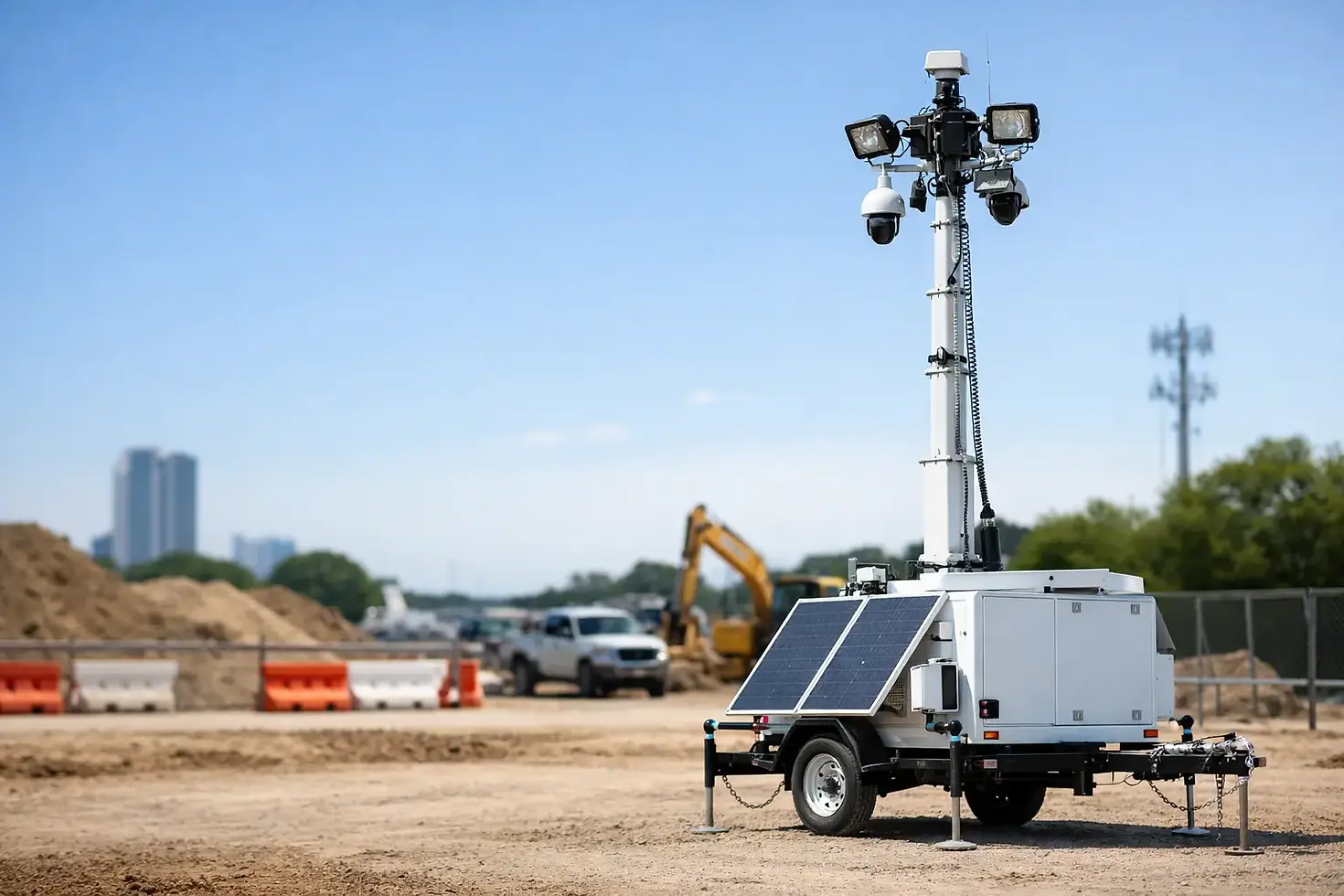
Mobile CCTV towers are no longer a niche option for large construction projects. Solar-powered units, high-definition cameras, remote access and monitored response are making them a practical choice for temporary sites, vacant properties, infrastructure works and locations where cabling is difficult or costly. The strongest trend is not simply better cameras. It is a shift towards faster, tailored protection that can be deployed, moved and removed as a site changes.
Mobile surveillance tower trends changing site protection
The demand for mobile towers is being driven by a familiar problem across South East Queensland and beyond: valuable assets are often placed in locations with limited power, limited lighting and limited visibility. A fixed CCTV installation may be the right long-term solution for an established facility, but it is not always practical for a short-term project, a remote laydown yard or a site that will change shape every few weeks.
A professionally configured tower can provide elevated coverage over fencing, entry points, plant, materials and vehicle movements without the lead time of trenching cables or installing poles. For many operators, that changes the security conversation from “what can we install?” to “what needs protecting right now?”
Solar power is becoming the default for temporary sites
Solar-powered surveillance towers are increasingly preferred where mains power is unavailable, unreliable or not yet connected. This is particularly relevant during early construction stages, on rural properties, civil works and temporary compounds.
Solar does not mean a tower can be placed anywhere without planning. Panel orientation, expected shading, battery capacity, camera load and local weather conditions all affect performance. A tower positioned beneath trees or beside tall structures may not produce the same results as one placed in an open, north-facing area. Proper site assessment remains essential.
The benefit is operational independence. A solar tower can continue protecting a site without relying on a generator, temporary electrical supply or frequent manual intervention. It can also reduce the cost and disruption associated with running power to a location that may only require protection for months rather than years.
Higher camera positions are improving usable coverage
The height of a mobile tower is one of its greatest advantages. Elevated cameras can see over parked machinery, temporary fencing and stockpiles that would obstruct lower-mounted systems. This makes it easier to monitor site access routes and identify activity occurring beyond the immediate gate line.
However, wider coverage is not always better coverage. A camera overlooking an entire site may provide context, while a closer camera at the gate is more likely to capture usable identification detail. Effective tower design balances overview cameras with focused views of high-risk areas such as fuel storage, tool cages, plant parking bays, boundary breaches and pedestrian entry points.
This is where configuration matters more than a headline camera specification. The right field of view, recording settings, lighting and detection zones determine whether footage is genuinely useful after an incident.
Remote access is now expected, not optional
Site managers increasingly expect to check live views and recorded footage from a mobile, tablet or office computer. Remote access helps answer practical questions quickly: Has a delivery arrived? Is a gate secure? Has plant been moved? Is there activity on site after hours?
The value is not limited to viewing footage after something has gone wrong. Remote visibility can help managers coordinate contractors, verify site conditions and reduce unnecessary visits to isolated or dispersed locations. For organisations managing several sites, central access also creates a clearer picture of risk across the portfolio.
That said, remote viewing should be controlled carefully. User permissions, secure passwords and properly managed system access are part of the security solution. A camera system that is easy for everyone to access is not automatically a safer one.
From passive recording to active monitored response
One of the most significant mobile surveillance tower trends is the move from passive recording towards verified, active monitoring. Traditional CCTV records an event for later review. Monitored surveillance adds the possibility of detecting, assessing and responding to suspicious activity while it is occurring.
Depending on the system and monitoring arrangement, this may involve alert notifications, live operator assessment, audio warnings or escalation to nominated contacts and emergency services where appropriate. For sites with repeated trespass, vandalism or theft attempts, this can be a stronger deterrent than cameras alone.
Active monitoring is not necessary for every location. A low-risk short-term site may only need recorded coverage and mobile alerts. A high-value construction compound, vacant commercial premises or isolated materials yard may benefit from 24-hour monitoring because the cost of one incident can outweigh the additional service cost. The decision should be based on exposure, asset value, site hours and the likely consequences of delayed response.
Analytics are becoming more practical
Modern camera analytics can distinguish between general movement and specific events, such as a person entering a restricted zone or a vehicle approaching a gate. When set up well, analytics reduce the stream of irrelevant alerts that can make security systems difficult to manage.
They are not magic. Rain, insects, changing shadows, wildlife and moving branches can still create false activations if detection areas are poorly configured. The practical trend is not relying on analytics alone, but combining them with sensible camera placement, carefully drawn detection zones and human review where the risk justifies it.
For temporary sites, this matters because conditions change quickly. A stack of materials can block a camera view. A new access track can create an unprotected approach. Detection settings should be reviewed when the site layout changes, not treated as a set-and-forget task.
Rapid deployment is becoming a procurement priority
Security gaps often appear with little notice. A project starts earlier than expected, equipment arrives before permanent fencing is complete, or a vacant property suddenly becomes a target. In these situations, the ability to deploy a camera tower quickly can be more valuable than an extensive fixed-system design that takes weeks to install.
Rapid deployment should still include planning. The tower needs a stable location, a clear view, secure positioning, suitable connectivity and an agreed process for accessing footage or responding to alerts. It should also be positioned so it does not interfere with vehicle movements, crane operations, public access or site safety requirements.
Pegasus Data Systems provides solar-powered camera tower deployments with setup, tailored configuration and site removal included, which can simplify the process for managers who need protection without taking on another technical project. The best outcome is a tower that arrives ready for the site's real risks, rather than a generic unit placed wherever space happens to be available.
Flexible security is replacing one-size-fits-all coverage
Another clear trend is scaling security to match the phase of work. A small early-stage site may need one tower focused on the entrance and equipment area. As construction progresses, additional towers may be required to cover new storage zones, rear access or a larger work perimeter. Once permanent CCTV is installed, mobile towers can be relocated or removed.
This flexibility is useful beyond construction. Retail operators managing refurbishment works, schools protecting holiday projects, councils overseeing temporary facilities and property owners securing vacant buildings can all benefit from security that does not require permanent alterations to the site.
It also creates a better path between temporary and permanent protection. A mobile tower can cover immediate exposure while a fixed CCTV, alarm, access control or intercom system is designed and installed. Rather than choosing between short-term and long-term security, site managers can use each solution for the job it suits.
What to assess before hiring or buying a tower
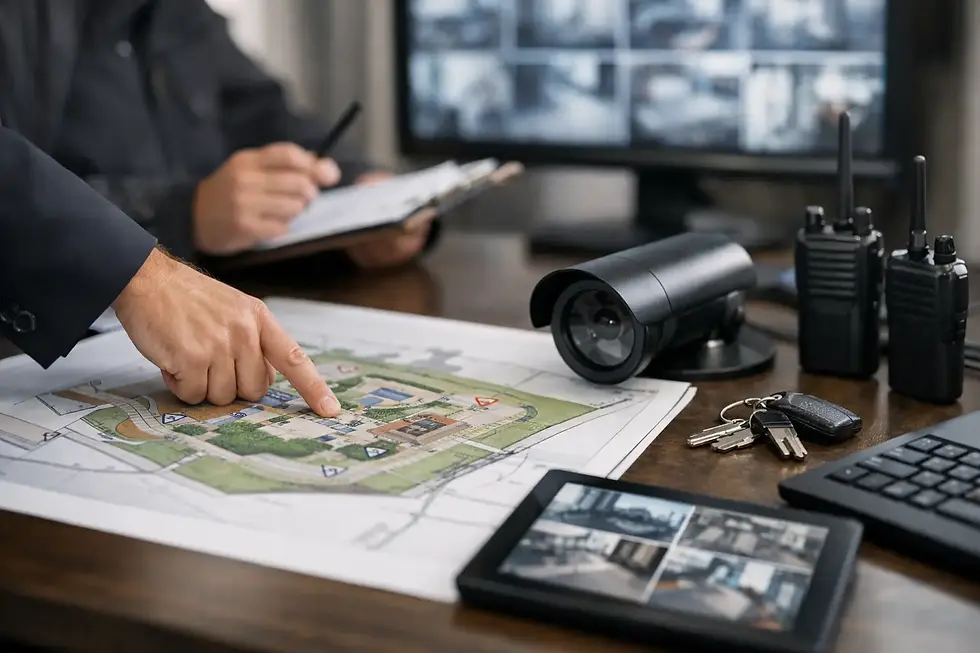
Before selecting a mobile surveillance tower, start with the risk rather than the equipment. Consider what is most likely to be targeted, when the site is most exposed and what evidence or response would be needed if an incident occurred.
Four practical questions usually clarify the requirement:
Which entry points, assets and boundaries need clear coverage?
Is power available, or is solar operation required?
Do you need recorded evidence only, remote alerts, or active monitoring?
How long will the site need protection, and is the layout likely to change?
Also consider connectivity. Remote CCTV relies on a suitable communications connection, and signal quality can vary between locations. A site assessment can identify whether the proposed position supports dependable remote access and whether alternative placement is needed.
Finally, ask who will manage the system. A tower is most effective when someone knows how alerts are handled, who can access footage and when settings should be reviewed. Professional installation and ongoing support reduce the chance that a well-specified system becomes an ignored asset after the first few weeks.
The direction is clear: mobile surveillance is becoming more intelligent, independent and responsive, but its value still comes down to practical planning. Put the tower where risk is real, configure it for the way the site operates, and review the coverage whenever the site changes. That is how temporary security delivers lasting control.


Comments