
Why CCTV Camera Angle Matters More Than Megapixels
- pegasusdatasystems
- Jul 2
- 6 min read
A 4K camera can still miss the one detail you actually need. If it is pointed too high, too wide, or into harsh backlight, you may end up with impressive-looking footage that does very little when there is a break-in, vehicle movement, or after-hours trespass. That is why CCTV camera angle matters more than megapixels in many real-world security setups.
For homeowners and site managers, this is where expectations often clash with results. The spec sheet says higher resolution should mean better identification, but image quality is only one part of surveillance performance. What really determines whether a camera helps you protect a driveway, loading area, gate, stock yard, retail entry, or temporary site is what the lens can actually see, from the right position, at the right height, under the right lighting conditions.
Why CCTV camera angle matters more than megapixels in practice
Megapixels tell you how much image data a camera can capture. They do not tell you whether the subject is in frame, whether the person is front-on or side-on, whether headlights are washing out the image, or whether the camera is too far away to capture useful detail where it matters.
A poorly positioned 8MP camera often underperforms compared with a well-aimed 4MP camera. That is not a theory. It is something seen regularly across residential installs, commercial premises, car parks, warehouses, and temporary construction or asset-protection sites.
If a camera is mounted for maximum area coverage, it may show a large section of the site but provide limited facial detail. If it is installed too high, it may capture the tops of heads instead of usable identification. If it points towards strong morning or afternoon sun, the image may be technically high resolution but still difficult to use. In all of those cases, the issue is not megapixels. It is angle, placement, and scene design.
Coverage and identification are not the same thing
One of the most common mistakes in CCTV design is assuming that seeing an area means securing it properly. General overview footage has value. It helps confirm movement, timelines, vehicle direction, and broad site activity. But overview footage is not the same as identification footage.
If your goal is to identify a person at a gate, read vehicle movement at an entry point, monitor staff access, or verify after-hours activity near a storage container, the camera needs to be aimed for that job. That usually means a narrower, more deliberate field of view focused on the decision point - not a wide-angle view trying to do everything at once.
This is especially relevant on larger or temporary sites. A mobile CCTV tower may overlook a broad perimeter or work zone, but key risk areas still need the right camera angle to capture events where they actually occur. Entrances, blind corners, fuel storage, plant equipment, and material laydown areas all have different surveillance needs.
The wrong angle creates blind spots you do not notice until later
Blind spots are not always obvious during installation. A camera feed can look acceptable on-screen while still missing the approach path someone is likely to use. Trees, fencing, parked vehicles, awnings, roller doors, and site sheds can all block sightlines depending on angle and height.
This is one reason professional placement matters. A camera should not just cover space. It should cover behaviour. Where does a person walk when they avoid the main entrance? Where does a vehicle pause before entering? Where could someone stand just outside the frame while still interfering with equipment or stock?
The best camera position often comes from understanding risk, not just geometry. A domestic front yard setup will differ from a retail tenancy, and both differ again from a civil works site or remote asset yard.
Height matters almost as much as angle
Install a camera too low and it may be vulnerable to tampering or vandalism. Install it too high and you reduce your chance of seeing faces clearly. There is always a trade-off.
For many applications, the ideal approach is not simply mounting the camera at the highest point available. High mounting can be useful for broad situational awareness, especially on towers and commercial buildings, but it often needs to be paired with more targeted cameras that look directly across a path of travel or towards an access point.
This layered approach is usually more effective than relying on one ultra-high-resolution camera to cover the whole site. A single camera trying to handle perimeter awareness, intruder identification, and incident verification at once will usually compromise one of those jobs.
Lighting can ruin a high-resolution image
Another reason CCTV camera angle matters more than megapixels is lighting. Cameras do not see a scene the way your eyes do. A person standing in front of a bright roller door opening, vehicle headlights entering after dark, or low afternoon sun across a driveway can all reduce usable detail.
The camera may still be recording in high definition, but the image can be overexposed, shadowed, or reflective. Changing the angle slightly can reduce glare, improve contrast, and produce far better footage without changing the camera itself.
At night, this becomes even more important. Infrared reflection from nearby walls, fences, shiny surfaces, or dusty site conditions can affect the image. On temporary or exposed sites, changing environmental conditions can have a bigger impact than buyers expect. A good surveillance design accounts for those variables before the system is installed or deployed.
Lens choice and camera angle need to work together
Megapixels get attention because they are easy to compare. Lens selection is less exciting, but it often has more impact on results. A wide lens captures more area but spreads detail across a broader scene. A tighter lens captures less area but gives better subject detail where it counts.
That choice only works if the camera angle supports the intended result. There is little point using a tighter lens if the camera is aimed from an awkward side profile, and little value in a very wide lens if identification is your main goal.
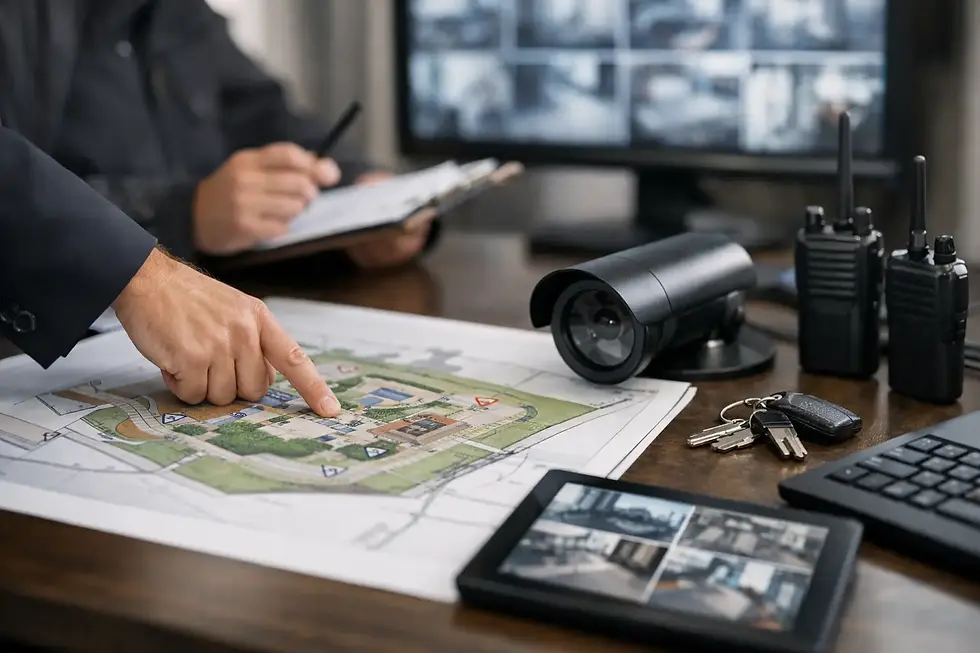
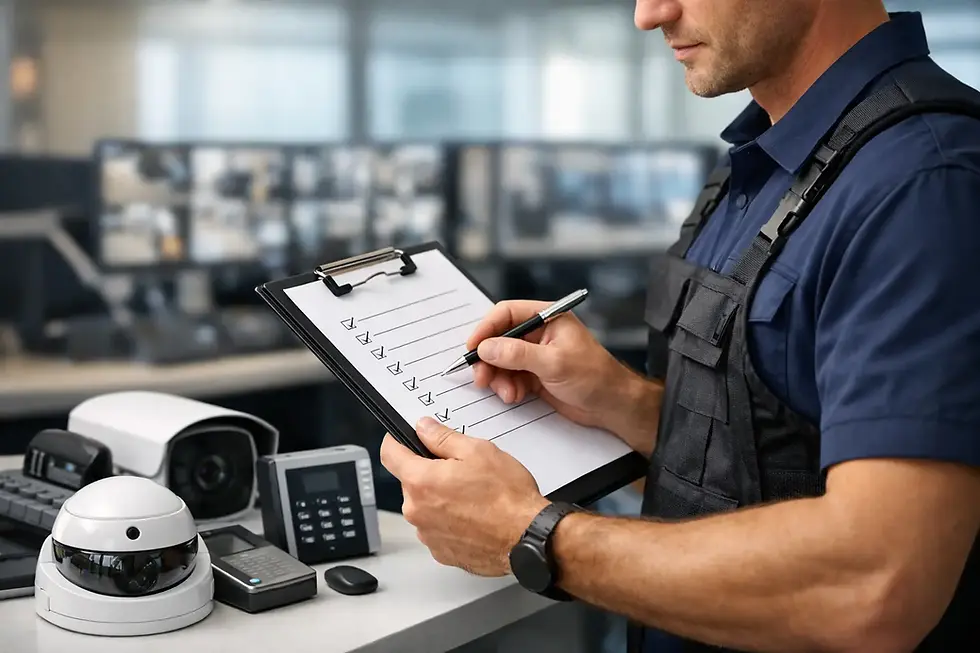
This is why a proper quote and site assessment matter. Security is not just about buying cameras. It is about matching camera type, lens, placement, mounting height, lighting conditions, and recording settings to the actual risks on site.
Fixed sites and temporary sites have different angle challenges
On a house or permanent commercial building, camera placement is shaped by the structure itself - eaves, walls, entry points, car parks, fencing, and available cable runs. On a temporary site, those constraints change. The camera may sit on a solar tower, and the environment can shift week to week as fencing, materials, machinery, and work zones move.
That means the ideal angle on day one may not stay ideal. For construction, civil works, events, infrastructure projects, and remote asset protection, surveillance needs to be flexible enough to respond to site changes. This is one reason rapid-deployment tower systems are so effective when they are configured properly. They provide height and coverage, but they still need targeted positioning around the risks that matter most.
In parts of South East Queensland where temporary sites can range from suburban infill builds to exposed regional compounds, camera angle becomes a practical operating issue, not just a technical preference.
What to prioritise when planning a CCTV system
Start with the outcome, not the spec sheet. Ask what each camera needs to achieve. Do you need to detect movement across a boundary, identify faces at a gate, monitor customer activity at a point of sale, or verify after-hours access to equipment? Those are different tasks, and they usually require different angles.
From there, look at distance to subject, likely approach paths, lighting at different times of day, and any objects that could create blind spots. Once those basics are right, resolution becomes more meaningful. Higher megapixels can absolutely help, but only after the camera is viewing the right scene in the right way.
For many sites, the strongest result comes from combining overview cameras with targeted identification cameras. That gives you both context and detail. It also reduces the risk of discovering after an incident that you recorded everything except the one angle you needed.
Better footage starts before the camera is installed
The most useful CCTV systems are not built around the biggest number on the box. They are designed around behaviour, movement, access, and risk. A camera should help answer practical questions quickly - who entered, where they came from, what they touched, what vehicle was involved, and whether a response is needed.
That only happens when placement is deliberate. For property owners, business operators, and site managers, the smarter question is not how many megapixels a camera has. It is whether the camera is looking at the right place, from the right position, for the conditions on your site.
If you get that right, resolution becomes an advantage instead of a distraction. And when footage needs to stand up after an incident, that is what counts.

Comments