Airfob Access Control for Smarter Sites
If you are still managing keys, fobs and access changes across multiple doors by hand, the problem is not just inconvenience. It is exposure. Airfob is designed to give property owners, site managers and business operators tighter control over who can enter, when they can enter, and how quickly permissions can be changed when risk shifts.
For many sites, that matters more than adding another standalone lock or replacing a few cards. Access control only works properly when it can keep up with real operations. Staff change. Contractors come and go. Delivery schedules move. Tenancies turn over. A modern system needs to match that pace without creating more admin for the people already responsible for security.
What airfob actually does
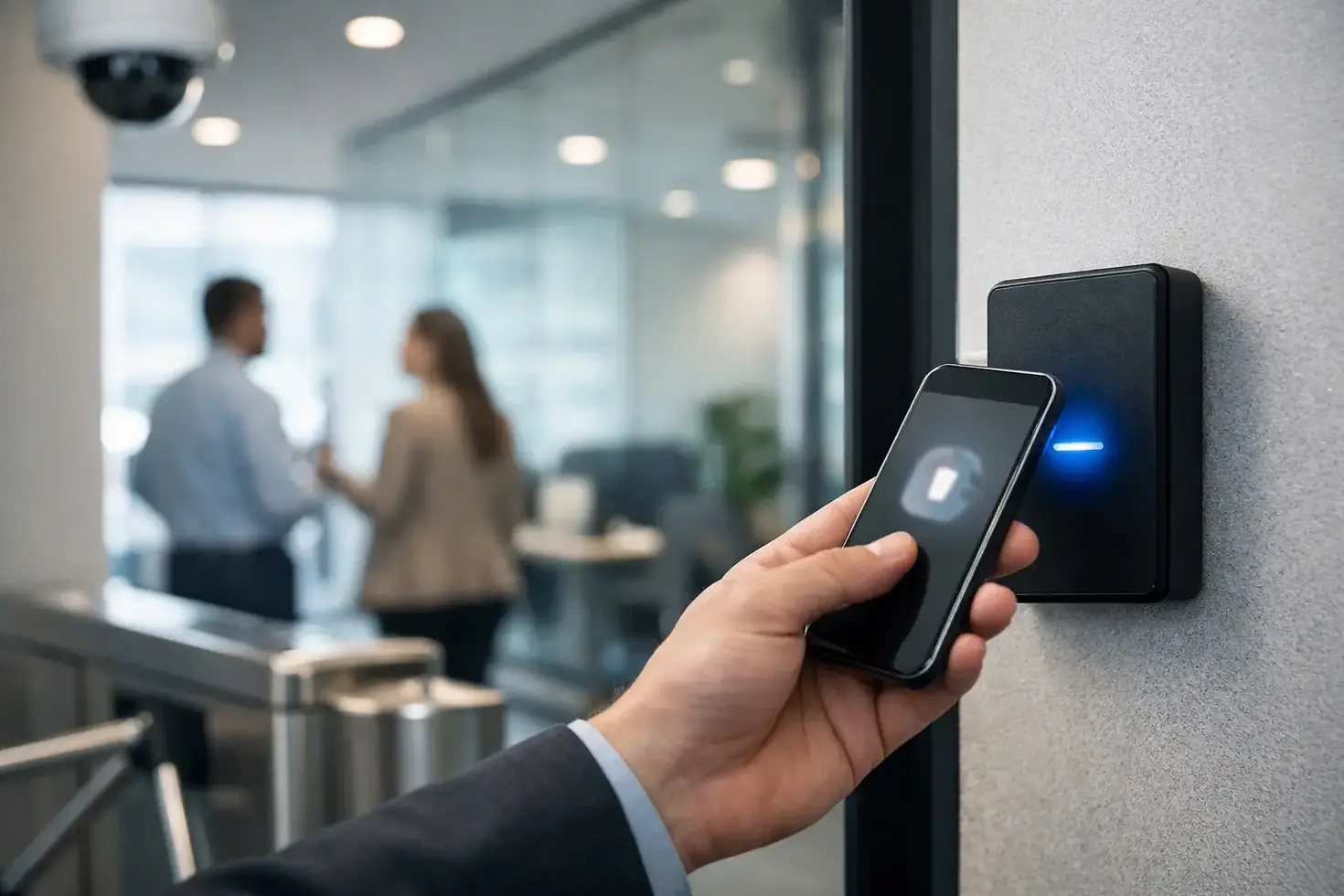
Airfob is a cloud-based access control platform that combines door hardware, mobile credentials, management software and remote administration. In practical terms, it lets authorised users open approved doors using a credential such as a mobile device or key fob, while administrators manage access permissions through a central interface.
That sounds straightforward, but the value is in how it changes day-to-day control. Instead of collecting keys after a staff departure or reprogramming access one door at a time, administrators can adjust permissions remotely. If a cleaner only needs after-hours access on Tuesdays and Thursdays, that can be defined. If a contractor needs entry for one week only, that can be set. If a credential needs to be removed immediately, that can happen without waiting for someone to attend site.
For residential buildings, retail premises and commercial facilities, this reduces the weak spots that often come from manual workarounds. For higher-risk environments, it also improves visibility. Entry events can be tracked, user access can be reviewed, and inconsistent access practices become easier to identify.
Why airfob suits modern access control
Older access arrangements tend to break down in familiar ways. Physical keys are copied. Cards are not returned. Access lists become outdated. Staff rely on one person who knows how the whole system works. When that happens, the site is not really controlled - it is just being managed loosely enough to get through the week.
Airfob suits modern access control because it addresses those pressure points directly. Remote management is one part of it, but not the whole story. The bigger benefit is that the system is built for changing environments. That matters for businesses with multiple staff categories, mixed-use buildings, common areas, restricted zones, and sites where operating hours are broader than a simple nine-to-five pattern.
There is also a cost and efficiency angle. A system that reduces rekeying, cuts down on lost credential replacement, and lowers the time spent handling access requests can improve operations as much as security. For managers balancing staff, tenancy, maintenance and compliance, that administrative gain is often what makes an upgrade worthwhile.
Where airfob fits best
Airfob can be a strong fit across a range of environments, but it is not a one-size-fits-all answer. The right result depends on the number of doors, the type of users, the level of risk and whether the site needs straightforward entry control or a more layered security setup.
Commercial offices and mixed-use buildings
Office environments often need more flexibility than they first appear to. Main entry doors, staff-only areas, shared facilities, after-hours access and visitor arrangements all create different permission levels. Airfob works well where those rules need to be managed centrally and updated regularly.
For mixed-use sites, where commercial tenancies may sit alongside shared access areas, the ability to assign different credentials to different user groups can simplify management considerably.
Retail and hospitality premises
Retail operators need staff access to be simple, but not loose. Storerooms, cash handling areas, management offices and delivery entries should not all be treated the same. Airfob can help create clearer separation between public and restricted spaces while making it easier to issue and revoke staff access as rosters change.
In hospitality settings, the same principle applies, though the pace is usually faster and staff turnover can be higher. Remote administration becomes particularly useful in those situations.
Residential and strata environments
Apartment buildings and gated communities often deal with resident credentials, common area access, service contractors and tenancy changes. A cloud-managed approach can improve control over these movements while reducing the headaches associated with lost remotes, copied keys and inconsistent handovers.
For strata managers and building operators, that can mean fewer delays and better accountability, especially when multiple users need different levels of access across lifts, entries, garages and shared amenities.
The trade-offs to consider
No access control platform should be selected on branding alone. Airfob has strengths, but it should still be assessed against the site’s operational needs.
One consideration is connectivity. Cloud-managed systems are attractive because they allow remote administration, but the site still needs reliable network planning. If a building has weak coverage, poor infrastructure or inconsistent power arrangements, those issues need to be addressed properly during design and installation.
Another factor is integration. Some sites only need door control. Others want the access system to work alongside CCTV, alarms, intercoms or remote monitoring. Airfob can be a good fit in many of these settings, but the final design should account for how all systems interact. A door event is more useful when it can be checked against footage or linked to a broader incident response process.
There is also the user adoption piece. Mobile credentials can be efficient, but not every workforce or resident base will prefer them. In some settings, a combination of mobile access and physical credentials makes more sense. Good system design accounts for how people will actually use the solution, not just what looks efficient on paper.
Airfob installation matters as much as the product
Access control performance comes down to more than software. Reader placement, door hardware compatibility, power supply, fail safe or fail secure settings, exit arrangements and emergency compliance all affect how well the system performs.
That is why installation should never be treated as an afterthought. A professionally planned airfob deployment starts with the site itself. Which doors need control? Which areas need restrictions by time or user group? What happens during a power event? How should deliveries, visitors or temporary contractors be managed? Those details shape the outcome.
A properly configured system should feel straightforward to use while still delivering strong control behind the scenes. If staff are confused by the setup, or if managers need repeated workarounds to get basic changes made, the system has not been matched to the site correctly.
For that reason, many buyers are better served by working with a provider that can handle specification, supply, installation and configuration together. Pegasus Data Systems approaches access control this way because the strongest result usually comes from aligning hardware, permissions and site conditions from the start rather than trying to patch them together later.
How airfob supports broader site protection
Access control should not sit in isolation. On a well-protected site, it supports a larger security strategy built around deterrence, visibility and response.
If an external gate, office door or restricted plant room is controlled by airfob, CCTV coverage around those points becomes more valuable. You are not just seeing movement - you are checking authorised access against actual activity. If alarm systems are in place, access schedules can also support cleaner arming and disarming routines. In some environments, intercoms and remote site visibility add another layer of control, especially where visitors or delivery drivers need managed entry.
For temporary or exposed sites, the same principle applies. While access control manages authorised entry at key points, surveillance infrastructure helps cover perimeter activity, after-hours movement and remote oversight. The strongest setups are designed as systems, not as isolated products.
Is airfob the right choice?
Airfob is a strong option for sites that need flexible credential management, remote administration and a practical way to scale access control without relying on outdated key handling. It is particularly useful where access permissions change often, where multiple user types need different rules, or where management wants better oversight without unnecessary complexity.
That said, the right answer still depends on the site. A single low-risk door may not need a sophisticated cloud-managed system. A large multi-area facility may need a wider integrated design. The important step is not choosing technology for its own sake. It is choosing a security setup that matches risk, operations and the level of control the site actually requires.
If access is becoming harder to manage, that is usually the signal. The right system should reduce friction for authorised users while making life much harder for everyone else.


Comments