
Ajax Alarm Systems for Smarter Security
A security system can look impressive on paper and still be the wrong fit on site. That is often where ajax stands out. It gives property owners and site managers a modern alarm platform that is easy to use day to day, but still capable enough for serious residential and commercial protection.
For many buyers, the real question is not whether an alarm can detect an intrusion. Most can. The question is whether the system will suit the way the property operates, whether it can scale as risks change, and whether staff or residents will actually use it properly. That is where product quality, installation standards and system design matter far more than brochure claims.
What makes ajax different
Ajax is best known for wireless intrusion detection, but that description is a bit too narrow. In practice, it is a broader security ecosystem built around alarms, smart detection devices, communication reliability and mobile control. The appeal is clear. You get commercial-grade thinking in a system that remains straightforward for everyday users.
The hardware design is clean, which matters more than some people expect. In a home, office, retail store or reception area, bulky devices tend to be installed reluctantly or placed poorly to keep them out of sight. A well-designed detector is more likely to be positioned where it actually performs properly. That improves both protection and user acceptance.
The other major advantage is speed of communication. When a detector is triggered, the system is designed to pass that information quickly and clearly. For businesses managing after-hours risk, or homeowners wanting confidence when away from the property, fast notification is not a luxury. It is the difference between an event being checked early or discovered long after damage is done.
Where ajax works well
Ajax suits a wide range of environments because it is flexible without becoming overcomplicated. That balance is useful in the real world, where no two sites have exactly the same risk profile.
Homes and residential properties
For homes, ajax is often a strong option where owners want something more capable than an entry-level retail alarm. It can cover doors, windows, internal movement and selected external areas, while giving users control through a mobile app, keypad or remote devices. That means residents can arm the full property when leaving, or partially arm zones at night without turning the house into a technical project.
It is particularly effective in homes where owners want cleaner installation outcomes. Wireless devices can reduce disruption compared with heavily cabled retrofits, especially in finished homes where access is limited. That said, wireless does not mean informal. Device placement, signal planning and detector selection still need professional attention.
Retail and commercial premises
Retailers and business operators usually need more than simple intrusion detection. They need a system that fits opening hours, staff access, cleaning schedules and after-hours security procedures. Ajax can work well here because arming and disarming can be managed in a controlled way, while detectors and peripherals can be assigned to the practical use of each area.
In a small office, that may be as simple as securing entry points and internal zones. In a shopfront, it may mean protecting stockrooms, POS areas and rear access. For commercial users, one of the key benefits is operational clarity. Staff should not need a technical manual just to set the alarm at close.
Temporary and exposed sites
This is where the conversation becomes more specific. Temporary worksites, storage compounds and exposed asset locations often need strong security without the benefit of established infrastructure. An ajax-based setup can be a useful part of that strategy, particularly when paired with broader surveillance and monitored response planning.
However, site conditions matter. A temporary site with changing layouts, perimeter weaknesses and elevated theft risk may need more than an alarm alone. In those cases, alarm detection should be considered alongside cameras, lighting, communication pathways and, where appropriate, rapid deployment tower-based surveillance. Alarm technology performs best when it is part of a complete site protection plan rather than a stand-alone fix.
The strengths of ajax in daily use
Security buyers often focus on what happens during an incident, but daily use is just as important. Systems fail in practice when they are awkward, confusing or easy to ignore.
Ajax has a strong reputation because it addresses the user side well. The app interface is generally easy to navigate, and system status is clear. Users can usually see whether the site is armed, which device has triggered, and what needs attention. That simplicity reduces operator error, which is one of the most common causes of alarm issues in homes and businesses.
The system also supports a range of detectors and accessories, allowing the design to be tailored to the property rather than forced into a one-size-fits-all package. That matters because a detached home, a medical suite and a machinery yard all present different risks. A capable platform should adapt to those differences.
Another advantage is the perception of quality. In security, confidence matters. If users trust the system, they are more likely to arm it consistently, respond correctly to notifications and maintain it properly. If they see it as temperamental or unclear, habits slip quickly.
What ajax does not solve on its own
No alarm platform is the answer to every risk, and this is where a practical approach is essential. Ajax is strong, but it still needs to be matched to the site.
If a location has broad open areas, limited lighting and no visual verification, an alarm event may tell you something has happened without showing what is actually happening. That can slow decision-making. In higher-risk environments, CCTV integration or a parallel camera system can be just as important as the alarm itself.
Similarly, if access control is a core issue, such as managing staff movement through multiple entry points, then alarms alone are not enough. The site may need a coordinated setup that includes controlled doors, audit trails, intercoms or remote access management.
Communication resilience is another consideration. Some properties have better network conditions than others, and some are more exposed to power loss or deliberate tampering. A properly specified system accounts for those variables from the start. That is why installation quality and system configuration should never be treated as secondary.
Why professional design and installation matter
A good alarm panel and high-quality detectors can still produce poor results if the system is badly planned. This happens more often than many buyers realise.
Detector placement affects everything. A motion detector installed in the wrong position may miss critical movement or generate nuisance alarms. A door contact fitted without care may create reliability issues over time. Communication devices, sirens and user interfaces all need to be chosen and positioned with the property layout in mind.
Then there is configuration. Entry delays, user permissions, arming groups, notification pathways and response options need to reflect how the site actually operates. A warehouse with staggered staff access should not be programmed the same way as a family home. A retail tenancy with rear laneway exposure should not be treated like a low-risk office suite.
That is why experienced providers such as Pegasus Data Systems focus on tailored design, proper installation and practical handover, rather than simply supplying a box of hardware. Security works best when the end user understands it, the installer has configured it correctly, and the whole setup suits the real conditions on site.
Is ajax the right choice?
For many homes and businesses, ajax is a very strong choice. It offers modern control, reliable intrusion detection and a polished user experience without becoming difficult to manage. It suits buyers who want professional-grade protection with less installation disruption and clearer everyday operation.
But the right answer still depends on the site. A suburban home, a boutique retailer and a temporary compound do not have the same threat profile. Some properties need alarm coverage only. Others need alarms combined with CCTV, access control, intercoms or monitored surveillance towers.
The best approach is to start with the risk, not the brand name. Look at what needs protecting, how the site is used, when it is most vulnerable and how quickly an incident needs to be verified and acted on. Once those questions are clear, it becomes much easier to see whether ajax is the right fit, or whether it should be part of a larger security solution.
Good security does not come from adding more devices than you need. It comes from choosing the right system, setting it up properly and making sure it still works when the pressure is on.
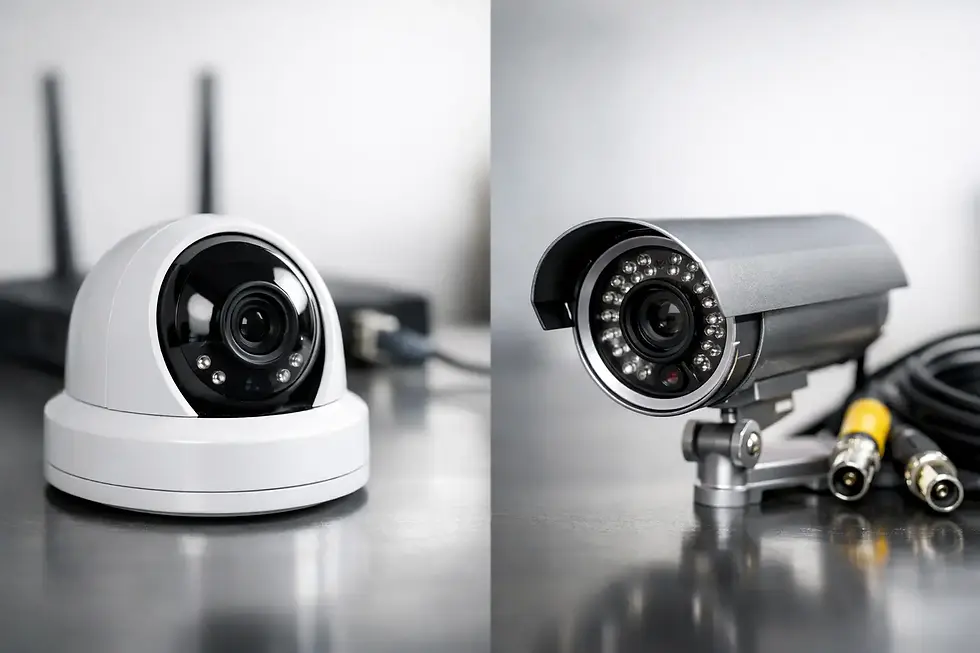


Ajax is a great system. Love ours installed by pegasus.