
Choosing an Asset Protection Surveillance System
- pegasusdatasystems
- May 22
- 6 min read
A stolen trailer, missing tools, damaged fencing or an after-hours break-in rarely happens at a convenient time. When a site is exposed, lightly staffed or spread across a wide area, an asset protection surveillance system stops being a nice extra and becomes part of day-to-day risk control. The real question is not whether surveillance helps. It is what type of system will actually suit the asset, the location and the way the site operates.
What an asset protection surveillance system needs to do
At a basic level, the job is straightforward. You need to deter trespassers, capture usable footage, alert the right people and support a fast response when something goes wrong. In practice, those outcomes depend on much more than mounting a few cameras and hoping for the best.
A workable system starts with the risk profile. A home with one vulnerable side entry needs a different setup from a retail tenancy with stock shrinkage concerns, and both are very different from a construction site with plant, materials and changing site boundaries. The strongest results come from matching the system to the exposure. That means looking at access points, lighting, power availability, line of sight, after-hours activity and how quickly someone can respond to an alarm or alert.
This is where many buyers lose money. They invest in hardware first and planning second. If camera placement is poor, recording quality is inconsistent or alerts are not configured properly, the system may still record an incident without helping prevent it.
Fixed systems versus mobile protection
One of the first decisions is whether the site needs a fixed installation or a mobile unit. A fixed CCTV and alarm setup usually makes sense for established homes, shops, offices, warehouses and facilities with stable infrastructure. You can hardwire cameras, integrate access control, add intercoms and build a reliable long-term security layer around the premises.
A temporary or changing environment is different. Construction sites, roadworks compounds, event spaces, laydown yards and remote asset storage areas often need surveillance without the delay and cost of permanent infrastructure. In those cases, a rapid-deployment camera tower can be the better fit. Solar-powered mobile towers are especially useful where mains power is limited, site layouts change or the protection requirement is urgent.
The trade-off is straightforward. Fixed systems usually offer deeper integration with the building itself. Mobile towers offer speed, flexibility and coverage where fixed systems are impractical. The right answer depends on whether the site is stable, how long protection is needed and what support infrastructure is available.
Coverage matters more than camera count
Clients often ask how many cameras they need. The better question is what needs to be seen clearly, and from where. Ten poorly positioned cameras can produce less value than four cameras configured properly.
For asset protection, coverage should focus on approach routes, gates, storage zones, plant parking, loading areas, entries, exits and any blind spots that give intruders time to work unnoticed. Identification quality is critical. If footage cannot clearly show a face, vehicle movement or handling of property, it may be of limited operational or evidentiary use.
Asset protection surveillance system design for real sites
Good design takes account of more than field of view. Lens selection, mounting height, infrared performance, scene lighting and recording settings all affect whether footage is genuinely usable. A camera facing direct glare at sunset, or one mounted too high for identification, can leave a costly gap.
For larger or more exposed locations, layered coverage is often the smarter approach. A tower or perimeter camera may provide broad oversight, while focused cameras cover entry points and high-value storage areas. That combination supports both deterrence and detail.
Detection is only half the job
Surveillance has to do more than record events after the fact. On many sites, the real value comes from early detection and response. Motion analytics, intrusion zones, alarm integration and live monitoring can help stop loss before it escalates.
This is where it pays to think through operations. If an alert is triggered at 2 am, who receives it? Who verifies whether it is a real incident? Who attends the site or contacts emergency services if needed? A system without a response pathway can still create footage, but it may not create protection.
Optional 24-hour monitoring can be worthwhile for higher-risk assets, especially where sites are isolated or regularly unattended. It adds cost, but it can also reduce the time between detection and action. For a business carrying expensive stock, or a temporary site storing machinery and materials, that time difference can be significant.
Power, connectivity and site conditions
An asset protection surveillance system is only as reliable as the conditions supporting it. This matters most on temporary, remote or difficult sites, where power and communications cannot be taken for granted.
Mains-powered locations generally allow broader system options. Remote or undeveloped areas often require solar power, battery storage and mobile network connectivity. That does not make the solution weaker, but it does make planning more important. Camera load, recording schedules, weather exposure and communications strength all need to be considered upfront.
Wind, dust, rain and heat also affect equipment selection. Outdoor surveillance in Queensland conditions should be specified for the environment, not chosen as if every site were a clean indoor tenancy. Protective housings, secure mounting and stable tower deployment all play a part in long-term performance.
Why integration improves results
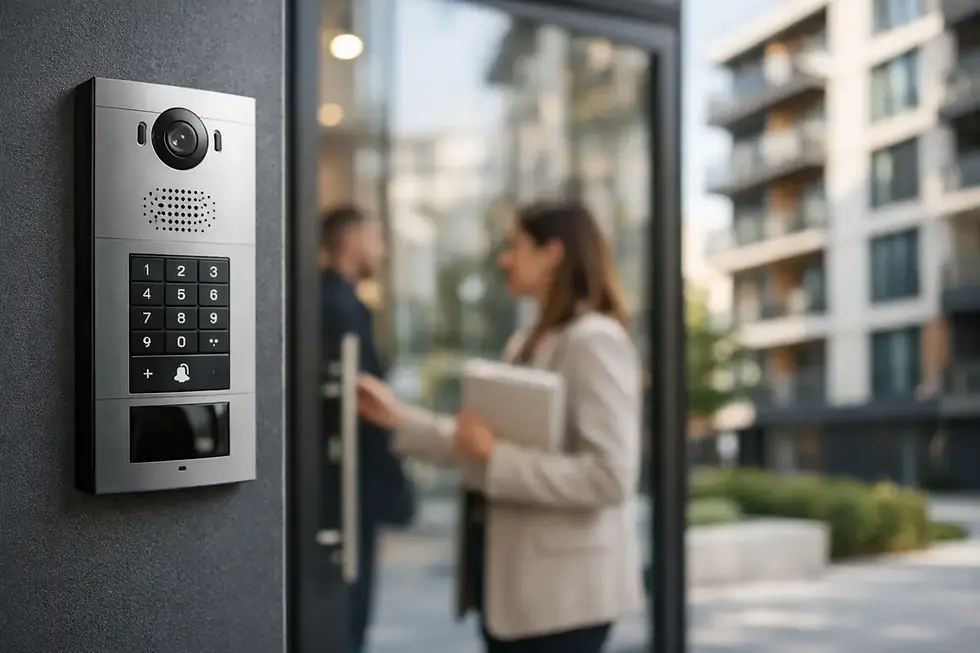
The strongest protection outcomes usually come from integrating surveillance with other security measures. CCTV works better when it supports an alarm system. Access control becomes more valuable when entries are visually verified. Intercoms can help control gates or visitor access while creating a record of interaction.
This matters for businesses and managed sites where incidents are not always straightforward break-ins. Sometimes the issue is unauthorised access by contractors, internal loss, after-hours tailgating or deliveries arriving outside approved windows. Integrated systems create context, not just footage.
When a standalone system is enough
Not every site needs every feature. A homeowner may only need a quality CCTV setup with app access and recording. A small retail operator may benefit from cameras and a back-to-base alarm without adding access control. The goal is not to overbuild. It is to apply the right level of protection for the asset value and the risk.
That is why a tailored quote matters. It helps avoid paying for features that will not be used, while making sure critical vulnerabilities are not left exposed.
Common mistakes when selecting a system
The most common mistake is choosing on price alone. Cheap cameras, patchy installation and generic settings often create blind spots, false confidence and poor footage retention. The initial saving can disappear quickly after one theft, vandalism incident or insurance dispute.
Another issue is underestimating deployment time. If the site has an immediate exposure, a slow procurement and installation process can leave assets unprotected during the highest-risk period. Fast deployment is often just as important as hardware quality.
It is also common to overlook site changes. On active sites, fencing moves, stock locations shift and access routes change. A surveillance layout that worked at handover may not suit the site three weeks later. Flexible systems and periodic reviews help keep coverage aligned with actual risk.
What to ask before you commit
Before approving any system, it is worth asking a few practical questions. What assets are you protecting, and when are they most exposed? Do you need deterrence, evidence, live response or all three? Is the site permanent or temporary? Is there reliable power and connectivity? Will the system be monitored, self-managed or both?
You should also ask who handles the full process. Supply-only can work for some buyers, but many sites benefit from end-to-end delivery that includes design, installation, configuration, testing and support. That is particularly true where mobile towers, integrated alarms or multi-site coverage are involved.
For clients across South East Queensland, Pegasus Data Systems approaches surveillance as a complete protection solution rather than a box of parts. That means equipment selection based on site risk, certified installation, tailored configuration and monitoring options where they add value.
Choosing an asset protection surveillance system that lasts
The right system should still make sense after the first week on site. It should be practical to use, suited to the environment and capable of scaling if your risks change. For some properties, that means a fixed CCTV and alarm setup. For others, it means a solar camera tower that can be deployed quickly and removed just as efficiently when the job is done.
Security decisions are easiest to justify when they reduce loss, support operations and remove uncertainty. If your current coverage leaves blind spots, depends on luck or cannot keep up with the site you are trying to protect, it is probably time to choose a system built for the way the asset is actually used.


Comments