
Dahua AI Intrusion & Line Cross Active Deterrent CCTV
False alarms waste time. Missed events cost money. That is why Dahua AI intrusion & line cross active deterrent CCTV is getting attention from site managers, business owners and property operators who need more than basic recording. Instead of passively capturing footage after an incident, these systems are built to identify movement rules in real time, trigger deterrents, and support a faster response when someone enters a restricted area.
For many South East Queensland sites, that matters most after hours. A standard camera may show you what happened. An AI-enabled active deterrent camera is designed to intervene while the event is still unfolding.
What Dahua AI intrusion & line cross active deterrent CCTV actually does
The two core analytics are straightforward. Intrusion detection watches for someone entering or lingering in a defined zone. Line crossing detection alerts when a person or vehicle moves across a virtual boundary in a chosen direction. When paired with active deterrent features such as flashing lights and audible warnings, the system can do more than notify - it can help disrupt trespass, theft attempts and unauthorised access before damage is done.
This is especially useful on exposed sites such as car parks, warehouses, entry points, retail perimeters, temporary compounds and construction areas. If a person crosses into a delivery yard at 2 am, the system can flag the event immediately rather than leaving someone to review footage the next morning.
Why AI detection is different from standard motion alerts
Traditional motion detection reacts to pixel change. That means shadows, rain, insects, headlights or moving trees can all trigger recordings and notifications. AI analytics are designed to filter that noise and focus more accurately on human and vehicle targets.
That does not mean every site gets perfect detection from day one. Camera height, angle, lighting, lens choice and scene complexity all affect performance. A narrow footpath has different requirements from a large open yard. This is where proper setup matters. Detection rules need to be configured for the site, not left on default settings.
For a homeowner, that might mean setting a virtual line across a side gate. For a commercial site, it could mean creating multiple intrusion zones around storage areas, gates and access roads. The value comes from matching the analytics to the actual risk points.
Where active deterrent CCTV makes the biggest difference
Active deterrent is most effective where there is a clear perimeter, a predictable traffic pattern and a genuine after-hours risk. Sites with repeat trespass, theft, vandalism or unauthorised vehicle access tend to benefit most.
A retail operator may want a line cross rule at a rear loading entrance after closing time. A warehouse may need intrusion alerts near roller doors and fenced boundaries. A temporary project site may need rapid deployment coverage without fixed infrastructure, which is where tower-based surveillance becomes practical. In these cases, cameras are not just documenting incidents - they are part of the response layer.
There is also a psychological benefit. Visible deterrent lighting and audio warnings can make an opportunistic intruder reconsider immediately. Not every offender will be put off, but many are looking for an easy target. A site that reacts is harder to ignore.
Dahua AI intrusion & line cross active deterrent CCTV in real-world deployment
The strongest results usually come when the camera is part of a wider security setup. Alerts can be combined with monitoring, alarm outputs, mobile notifications and site-specific escalation procedures. That means the system is not working alone.
For example, if a line cross event occurs at a gate, the camera can trigger local deterrence while also sending an alert for review. If that site is monitored, the response can escalate quickly. If it is a standalone installation, the owner or manager still receives a more useful alert than a generic motion notification.
This is where professional design and installation make a noticeable difference. Placement, cabling, power, network reliability, storage settings and rule calibration all affect whether the system becomes a dependable asset or a source of nuisance alerts. Pegasus Data Systems typically sees better outcomes when analytics, deterrence and monitoring options are planned together rather than added as separate pieces later.
What to consider before choosing this type of CCTV
Not every location needs active deterrent on every camera. In some areas, discreet surveillance is preferable. In others, a visible warning and flashing light are exactly the point. The best result usually comes from mixing camera types across the site.
You should also think about environment and use case. Night performance, glare, weather exposure, network access and available power all matter. A suburban home, a retail tenancy and a remote temporary site have very different design needs. If the site changes often, mobile solar CCTV towers can be a better fit than a fixed installation.
It is also worth checking how alerts will be handled. A smart camera is only as useful as the response behind it. If no one reviews the events or acts on them, even advanced analytics lose value.
Is it the right solution for your site?
If your current system records incidents but does little to prevent them, Dahua AI intrusion & line cross active deterrent CCTV is worth considering. It suits locations where early warning, perimeter awareness and visible deterrence are more important than simply collecting footage after the fact.
For property owners and site managers, the real benefit is practical: fewer irrelevant alerts, better visibility around risk areas, and a stronger chance of interrupting unwanted activity before it escalates. When the system is designed properly for the environment, it becomes a working part of site protection rather than just a camera on a wall.
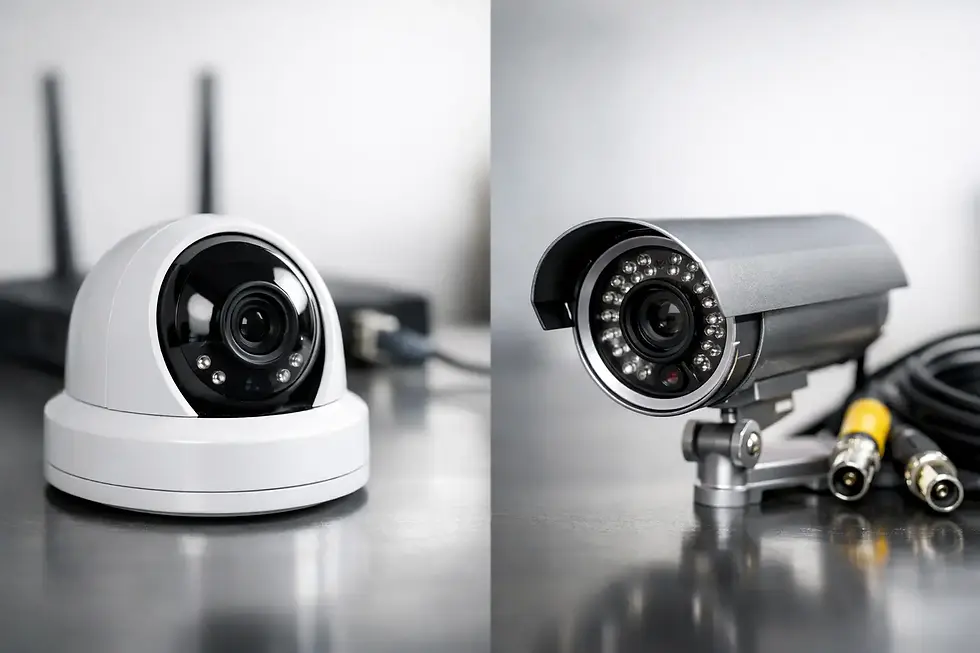


One of the best systems on the market.