
How to Buy Commercial CCTV Cameras
- pegasusdatasystems
- May 18
- 6 min read
A cheap camera that misses a number plate at the gate or washes out a face at the entry point is not a saving. When you buy commercial CCTV cameras, you are buying evidence, site visibility and a stronger response to after-hours risk. That means the decision should be based on what the system needs to achieve on your site, not just how many cameras come in the box.
For commercial buyers, the difference between a consumer setup and a proper surveillance system usually shows up when something goes wrong. A break-in, trespass event, stock loss issue or vandalism incident quickly exposes weak coverage, poor image quality and rushed installation. The better approach is to plan the system around the real risks, site layout and operating conditions from the start.
What to assess before you buy commercial CCTV cameras
The first question is not camera brand or resolution. It is what you need to protect. A retail tenancy has different priorities from a warehouse, body corporate, school, depot or temporary work site. Some sites need clear facial identification at entrances. Others need wide perimeter coverage, vehicle tracking, after-hours alerts or visual oversight of high-value assets.
Think about the key risk points on the property. Entry and exit doors, loading areas, car parks, roller doors, plant zones, storage cages and boundary lines are often the first places to assess. If you are managing a temporary or exposed location, such as a construction site or remote compound, you may also need mobile coverage that can be deployed quickly without relying on fixed power or complex cabling.
It also helps to be realistic about what footage needs to do. Watching general movement is one thing. Identifying a person, reading a plate or reviewing an incident for police or insurance is another. Those outcomes require different camera positions, lens choices and image settings.
Image quality matters, but placement matters more
Higher resolution has value, but it does not fix poor design. A 4K camera mounted too high or aimed too wide can still deliver unusable footage. In commercial environments, camera placement often matters more than headline specs because the system needs to capture usable detail where incidents are most likely to happen.
A good design balances overview cameras with cameras aimed at specific identification points. You may want broad coverage in a car park or warehouse floor, but tighter views at entry gates, tills, reception areas or stock access points. This gives you context as well as detail.
Lighting is another factor buyers often underestimate. Backlit glass shopfronts, dim laneways, floodlit yards and internal areas with mixed lighting can all affect image performance. Cameras should be selected for the environment they are monitoring, particularly for night use or areas with changing light conditions.
Night performance and motion recording
Many incidents occur after hours, so night performance is not a minor feature. Infrared range, low-light capability and the ability to handle shadows or vehicle headlights all affect whether the system helps or fails when it matters most.
Motion recording can also be useful, but it depends on the site. In a quiet office, it may reduce storage demands. In a busy frontage or windy yard with constant movement, poor motion settings can create endless false events and make review harder. Commercial systems need proper configuration, not default settings left untouched.
Storage, retention and remote access
Once footage is captured, you need to know how long it will be kept and how easily it can be retrieved. Many commercial buyers focus on cameras and forget the recorder or storage side of the system. That can create problems later when footage has already overwritten or cannot be exported properly.
Retention periods should suit the type of site and operational requirements. A retail business may want enough history to investigate stock discrepancies. A commercial facility may need longer retention for incident review, contractor disputes or compliance needs. More cameras and higher resolution generally mean greater storage demand, so the recorder and hard drive capacity need to match the brief.
Remote access is now expected, but it should be secure and practical. Site managers and business owners want visibility from their mobile or office, especially across multiple locations. The system should make that easy without becoming difficult to manage. Clear user permissions also matter if more than one person needs access.
Wired systems, wireless options and mobile towers
There is no single right format for every site. Fixed wired CCTV is often the best choice for permanent premises because it provides stable performance and can support larger, more integrated systems. For offices, retail shops, warehouses and industrial sites, this is commonly the strongest long-term option.
Wireless components can help in some layouts, but they should not be treated as a shortcut for every commercial application. Signal limitations, interference and power requirements still need to be considered. In some situations, wireless works well as part of a broader design rather than as the whole system.
For temporary sites, remote compounds and places where permanent infrastructure is not practical, mobile camera towers can be the smarter answer. Solar-powered tower systems are particularly useful where fast deployment, relocation and broad site coverage matter more than fixed building-based installation. They suit high-risk areas, asset protection zones and projects where the security requirement changes over time.
Integration often delivers better protection
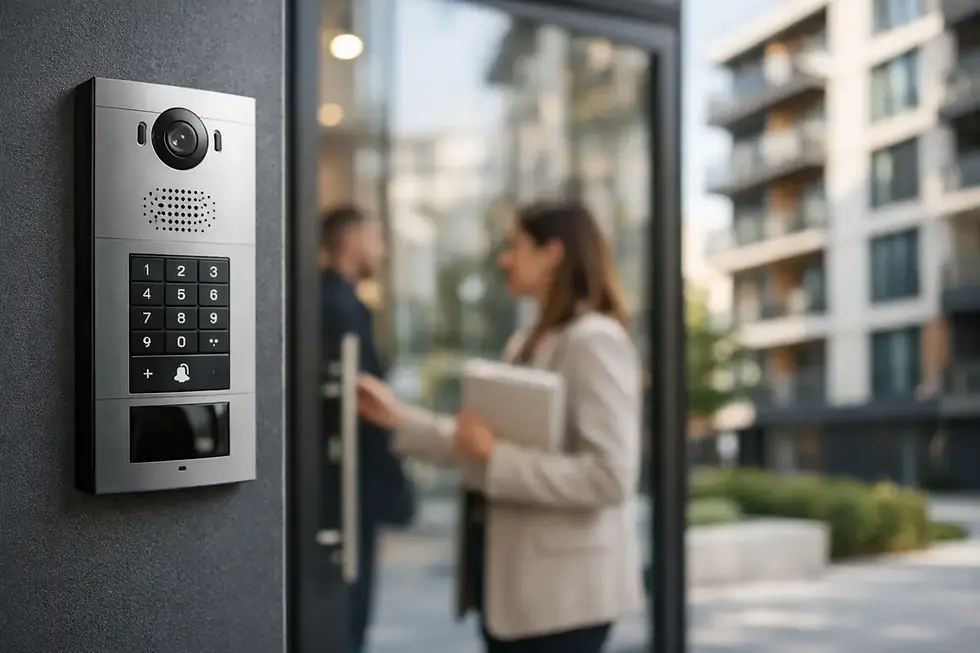
CCTV rarely works in isolation on a commercial site. Cameras are more useful when they are considered alongside alarms, access control, intercoms and monitoring. If a gate is a known risk point, for example, camera coverage should support who entered, when they arrived and what happened next.
This is where a tailored security approach usually outperforms buying standalone hardware online and hoping it fits later. A properly integrated system gives clearer oversight and a more consistent response when an event occurs.
Choosing the right supplier, not just the right camera
Buying commercial CCTV cameras is partly a product decision, but it is also a delivery decision. The supplier should be able to do more than ship boxes. Commercial buyers often need site assessment, system design, certified installation, configuration, testing and support after handover.
That matters because many performance issues are not product faults. They come from poor positioning, weak network setup, incorrect recorder settings or cameras that were never selected for the conditions on site. Working with a provider that handles the full process reduces those gaps.
For businesses across South East Queensland, that can also mean faster deployment and easier coordination if the project includes installation, upgrades or monitoring. Pegasus Data Systems works in that service-led model, which suits buyers who want commercial-grade equipment backed by practical delivery rather than a retail-style transaction.
Budget, scale and where to spend properly
Every buyer has a budget, and a sensible budget should be respected. The key is knowing where cheaper options create long-term cost. If you reduce spend by cutting recorder capacity, using too few cameras or overlooking key access points, the system may need rework soon after installation.
A staged rollout can be a smart option for larger premises. You might secure the highest-risk areas first, then expand coverage as the business grows or the budget allows. The important part is designing with that future expansion in mind so you are not replacing core components too early.
It is also worth considering the cost of not getting it right. Theft, downtime, insurance claims, damage to assets and staff safety concerns usually cost more than investing in a system that performs properly from day one.
Common mistakes when buyers purchase on specs alone
One of the most common mistakes is buying for maximum camera count instead of useful coverage. More devices do not automatically mean better surveillance. Another is assuming all high-resolution cameras will produce identification-quality footage in every condition.
Buyers also get caught by overlooking installation realities. Ceiling height, sun direction, reflections, dust, weather exposure and network limitations all affect performance. On exposed sites, vandal resistance and reliable power are just as important as image quality.
Then there is monitoring. Some sites only need recorded footage for review. Others benefit from active monitoring or alert-based response, particularly where the risk of trespass, theft or after-hours activity is high. It depends on how quickly you need to know something is happening, not just whether it was recorded later.
The best commercial CCTV system is built around your site
There is no value in buying a system that looks good on paper but misses the real risks on the ground. The right commercial CCTV setup should match the way your site operates, the hours it is exposed, the assets being protected and the level of oversight you actually need.
That may mean a fixed multi-camera installation for a business premises, a system upgrade for an existing recorder network or a rapidly deployed solar camera tower for a temporary site. The right answer depends on the environment, the threat profile and how you want the system to support your operations.
If you are planning to buy commercial CCTV cameras, focus on outcomes first. Clear footage, dependable coverage, practical access and the right delivery support will always matter more than a bargain price on equipment alone. A well-matched system does more than record incidents - it helps prevent them, supports faster decisions and gives you more control over what happens on your site after hours.


Comments