
Hikvision for Smarter Site Security
- pegasusdatasystems
- 4 days ago
- 6 min read
A camera that records clear footage but misses the actual risk is not doing much for your site. That is where Hikvision tends to stand out. For many property owners, site managers and business operators, it offers a practical balance of image quality, system flexibility and commercial-grade features that suit real security requirements rather than box-ticking.
Whether you are protecting a home, a retail tenancy, a warehouse or a temporary worksite, the value of a surveillance system comes down to how well it fits the environment. Brand matters, but design matters more. Hikvision is widely used because it gives installers and end users a broad platform to work with, from standard CCTV coverage through to advanced analytics, access control integration and remote management.
Why Hikvision remains a popular choice
The main reason Hikvision appears in so many professional security installations is range. It covers straightforward single-site camera systems as well as larger, more complex deployments with multiple cameras, recorders, remote access and integrated devices. That flexibility matters when a customer wants a system that can start with a few key areas and expand later.
Image performance is another factor. In practical terms, that means clearer footage at entries, car parks, loading zones, shop floors and perimeter lines. Good resolution on its own is not enough, of course. Placement, lighting, lens selection and recorder settings all affect the result. Still, Hikvision gives a strong foundation when the goal is usable footage rather than grainy recordings that look acceptable until something goes wrong.
For Australian conditions, reliability also matters. A surveillance system in South East Queensland may need to cope with heat, storms, glare and varied lighting across indoor and outdoor zones. Equipment selection should always account for site conditions, but Hikvision has product options suited to both sheltered interior areas and exposed external applications.
Where Hikvision fits best
Hikvision is not limited to one type of customer. It can suit homeowners wanting stronger perimeter awareness, but it is especially effective in commercial and mixed-use settings where coverage requirements are broader and operational risk is higher.
In retail, it can support loss prevention, after-hours monitoring and incident review. In offices and commercial buildings, it can be paired with access control and intercom systems to improve oversight of who enters and when. In warehouses and industrial spaces, the focus is often on perimeter protection, loading bays, stock areas and vehicle movement.
Temporary and exposed sites are a different challenge. Construction zones, laydown yards, vacant properties and infrastructure works often do not have the luxury of permanent cabling or established security infrastructure. In those cases, cameras need to be part of a larger deployment strategy, often involving mobile towers, solar power, remote connectivity and optional monitoring. The camera brand matters, but the success of the system depends on how well those components are brought together.
Hikvision for fixed sites and mobile deployments
This is where a professional approach makes a difference. A Hikvision camera on its own may be suitable for a fixed building, but a temporary site usually needs more than standalone hardware. It needs coverage planning, reliable transmission, secure mounting, power continuity and a response pathway if an event is detected.
For mobile or rapid-deployment security towers, compatibility and remote visibility are critical. The surveillance equipment has to work as part of a complete protection system, not just record footage locally. For site managers dealing with theft, vandalism or repeated trespass, that distinction is important. A camera that captures an incident after the fact is useful. A system designed to deter, detect and support response is far more valuable.
What to look for in a Hikvision system
Choosing Hikvision is only the starting point. The better question is which configuration suits your site, operating hours and risk profile.
Camera type should match the task. A wide-angle camera may be fine for general overview footage, but gates, entry points and cash handling areas often need more focused identification quality. Night performance is equally important. Some sites need basic infrared coverage, while others benefit from smarter low-light performance or active deterrence features.
Recorder capacity is often overlooked. Storage settings affect how long footage is retained and how clear it remains when played back. A site with several high-resolution cameras can burn through storage quickly if the system has not been sized correctly. There is no value in having excellent cameras if footage retention falls short of your operational or compliance requirements.
Remote access is another practical consideration. Most business owners and managers want to check cameras from a mobile or desktop device, especially after hours. That convenience is useful, but it should be configured properly with security in mind. Remote viewing should support operations, not create avoidable vulnerabilities.
Analytics can also be worthwhile, though only when they suit the application. Motion detection is common, but not always enough. Depending on the site, line crossing alerts, intrusion detection or vehicle and human classification may reduce false alarms and improve response. That said, analytics are not magic. Busy environments, changing light and poor positioning can still affect accuracy. The right setup matters more than ticking every feature on a brochure.
Hikvision and integrated security
One of the stronger reasons to consider Hikvision is its ability to sit within a broader security solution. CCTV is more effective when it supports other layers of protection rather than operating in isolation.
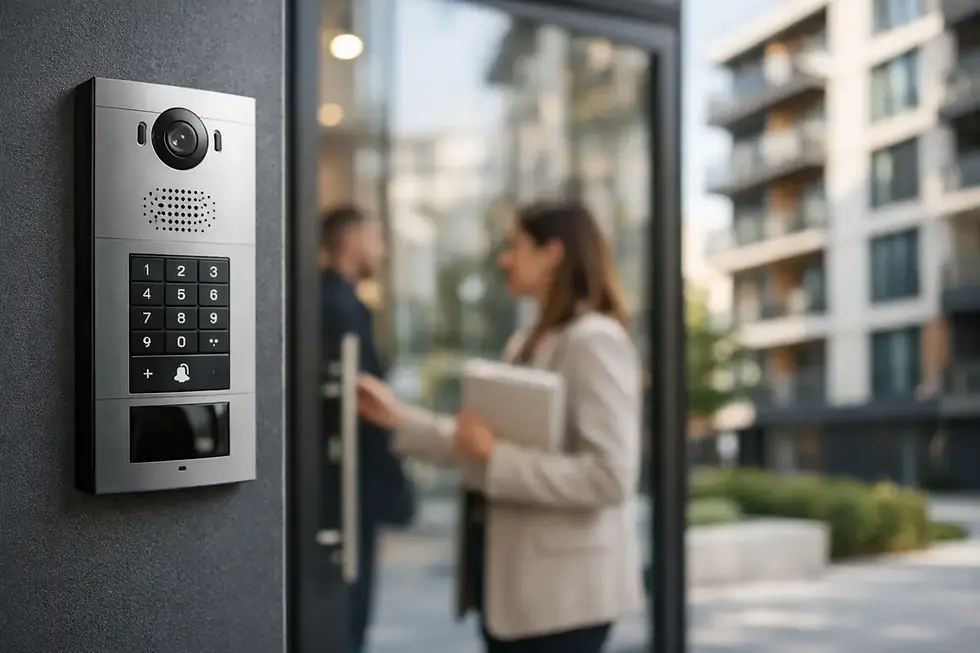
For a commercial premises, that may mean pairing cameras with access control so entries and exits can be verified against recorded footage. For multi-tenant or gated environments, it may involve intercom integration to improve visitor management. For higher-risk locations, alarm triggers and remote monitoring can add another level of oversight, particularly outside business hours.
This integrated approach is often where buyers see the best return. Instead of assembling separate devices that do not communicate properly, the site is configured around how people move, where risks sit and what action should follow if something happens. That is a much better outcome than buying equipment first and trying to make it fit later.
The trade-offs to consider
No brand is automatically the right fit for every site, and Hikvision is no exception. The size of the property, the level of risk, privacy requirements, network setup and future expansion plans all play a part.
For a small home, a simple system may be enough and there is little point overcomplicating it. For a large site with remote access points, perimeter blind spots or temporary infrastructure, a more advanced design is justified. Budget also matters. Spending less upfront can be reasonable if the risks are low, but cutting corners on key areas such as coverage, storage or installation often costs more later.
There is also a difference between buying hardware and getting a working result. Many problems blamed on equipment are actually design or installation issues. Poor camera placement, wrong lens choice, inadequate lighting and weak network planning can undermine even good products. That is why a site-specific quote and proper configuration are worth taking seriously.
Getting the best result from Hikvision
The best outcomes usually come from starting with the risk, not the catalogue. Ask what needs to be protected, when incidents are most likely to happen and what footage or alerts would actually help if something went wrong.
From there, system design becomes much clearer. A residential customer may need front boundary coverage, driveway visibility and app access. A retailer may need entry coverage, POS oversight and after-hours alerts. A site manager may need a rapid-deployment tower with Hikvision cameras, solar power, remote connectivity and optional 24-hour monitoring to protect plant, materials and equipment without waiting for fixed infrastructure.
That practical, tailored approach is how Pegasus Data Systems works with customers across South East Queensland. The objective is not simply to supply cameras. It is to build a security solution that matches the site, the threat level and the operational reality.
Hikvision can be an excellent platform when it is selected for the right reason and installed the right way. If your priority is dependable surveillance that can scale from a single premises to a more complex site security setup, it is a brand worth considering carefully. The real advantage comes when the system is designed to protect what matters most, not just to record it after the damage is done.


Comments